Thursday, April 11, 2013

Be Still, My Writing Heart...

This past weekend I had the opportunity to attend the Reading Reptile's "DNA Lit Fest." (a huge thank you to the parent who made that possible!) On Saturday, I participated in the Writers' Conference at the Kansas City Public Library's Plaza branch. The authors shared their struggles, joys, inspirations, and even gave us a preview of their new books! I was in awe--I mean the authors were all best-selling, Caldecott or Newberry Award-Winners! 


Be still, my writing heart...

The most amazing part of the experience is that it renewed my faith as a writing teacher. I mean here are some truly successful people who've made writing and illustrating books their livelihood, and they're talking about stuff I teach to my second graders! Take the Writer's Notebook, for example. Jack Gantos, creator of the Rotten Ralph series--a childhood favorite of mine--shared his notebook with us. 

He shared that he's been keeping journals and notebooks since the fifth grade. These journals became his prized possession and allowed him to record ideas for decades--ideas that he's turned into a multitude of published pieces, such as the Jack Henry series or his latest novel, Dead End in Norvelt. This is what we're trying to do in the second grade--engage our students in authentic experiences that shape their lives, just like Jack Gantos. Their writing notebooks are just like Jack's. They contain ideas, scribbles, notes, diagrams, lists, and colors that evolve into published pieces.


Jack Gantos also discussed the importance of story structure. He told us that many of his early works were rejected because he wrote complicated, messy plots. When he showed us his recipe for successful writing, my heart skipped a beat. Characters, setting, problem, solution...these are the elements we teach in second grade reading and writing, and here they are in a successful writer's toolbox!

That moment when you just know you're on the right track? Yep. For me, it was the DNA Lit Fest. I walked out of that library on a cloud. 

Friday, April 5, 2013

The Rules

I've been thinking a lot about rules lately. I've got two in my room: Work hard. Be nice. At the start of every year, my students argue with me that there's should be more than two rules. "What about no pushing? Or put your name on your paper? What about raise your hand to talk?" They usually rattle off about ten more before I challenge that all of their examples can fit under one of my two rules. We organize their ideas into the two categories--raising your hand to talk fits under Be nice. Writing your name at the top of your paper? That's definitely a Work hard. After a while, my students get the hang of it.

I don't think there's a wrong or right answer to how many rules a teacher should have in his or her classroom. For me, I like having two. It's easy to remember and funnel any action or conversation into a lesson about working hard or being nice. I got the idea from a second grade teacher at my old school. She had the rules posted right in the front of her class in big block letters--no exclamation points, just periods at the end. Work hard. Be nice. I remember walking by her class on the first day of school and thinking, She's summed it up in two short sentences. What else is there? I mean, really. The simplicity of these two rules just makes sense in a classroom setting, where you're learning a million different things at once.

I do, however, include a million and one expectations in my room. Expectations are different from rules because they don't deal with right and wrong. They are there to ensure efficiency and growth in the classroom. And yes, a sense of order as well. Some expectations even go beyond classroom management. Expectations serve as teaching tools for manners, character, and citizenship. 


One of the best books I've ever read about rules and expectations is called The Essential 55 by Ron Clark. He's a personal hero of mine (see Ron Clark Revelations or Hit 'Em with the Old Song and Dance) and I've had the pleasure of not only meeting him but observing him teach in his classroom as well. Mr. Clark wrote The Essential 55 using the term "rules," but I'd argue that many of them are really "expectations." He explains his reasoning for each and every one, proving that his rules are meant for more than classroom management. He began his teaching career in Harlem but is now running a non-profit school in Atlanta, Georgia, called the Ron Clark Academy. His rules, or expectations, aren't just for the students in the inner city--they apply to us all! I highly suggest reading it--it made me straighten up in my chair and shape up some of my own bad habits! 


Thursday, January 24, 2013

Ribsy for Read-Aloud


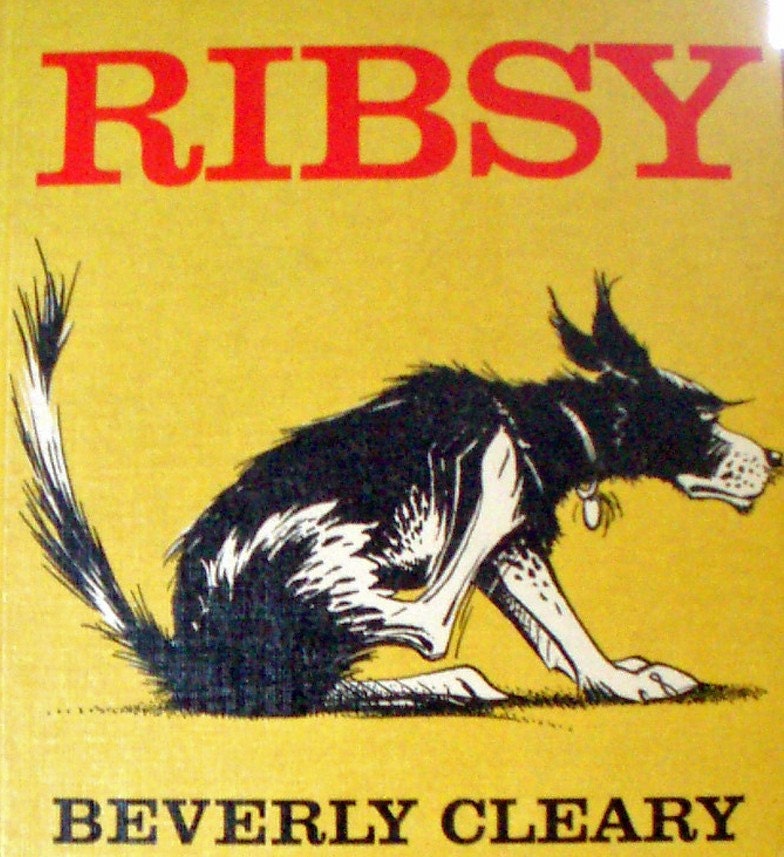
So we started a new read aloud today--Ribsy, by Beverly Cleary. Boy, I can't even begin to tell you what a good read aloud does for a student.

For one, it hasn't been made into a movie yet (see Tuesday Rant for further information) and so my students don't know what to expect. Second, it doesn't have a single television, cartoon, iPad/iTouch, or Nintendo DS reference--woo hoo for the imagination!. And last of all--this may be the greatest argument for a good ol' fashioned book--it doesn't have a snarky, sarcastic narrator and dialogue that I have to stop and explain to the kids. Don't get me wrong--Junie B. Jones, Judy Moody, Amber Brown--they're a kick to read, but in whole group setting, things can get a little dicey. You end up explaining a lot of the quick-witted dialogue to younger students.

So this book, Ribsy, it's a joy to read aloud. The main character, a dog thinks like a person but can't communicate with his owners. The kids really find the humor in that. The story is somewhat predictable, so it's fun to watch students gasp and nod when they realize what will happen now that Ribsy is roaming a mall parking lot without his leash--he's doomed. They smirk and whisper, "Yep, I totally saw that coming," to one another.

I know the temptation is there to read all the newest, most popular, or attention-grabbing books out there, but it's really nice to sit down and read an oldie once in a while. Beverly Cleary wrote Ramona Quimby, Age 8, The Mouse and the Motorcycle, and Dear Mr. Henshaw, to name a few. She's awesome. Her stories are timeless--sibling rivalries, animal characters dealing with the pains of adolescence, elementary school dramas.  My mother read the stories as a child and could share in my excitement as I read them throughout the primary grades. In fact, the copy I'm currently reading to my class is an old, tatty copy that my mom shoved into my purse the last time I came over for a family dinner.

Sure, the book is old, the illustrations are few and far between, and some of the 1964 references (i.e. the milkman delivering milk to the Huggins family) might need a little explaining, but the story is wonderful. It will definitely be on my second grade read aloud list for a long time.

Thursday, December 13, 2012

Quest for the Perfect Pencil

Few things torment me more than a stubborn wooden pencil. 

I'm serious. I consider the standard #2 wooden pencil to be my adversary, my arch nemesis, the villain in my superhero teaching story. It interrupts my class, assaults our ears with the help of its trusty sidekick, the electric sharpener. It taunts me with promises of unbounded lead, only to break said promise at the slightest pressure. 

But I've not yet given up on the noble quest for the perfect pencil. I've met many worthy opponents over the years. Let's take a look at some of them, shall we? 

The Scratcher
This specimen starts out as a regular pencil. Perhaps you didn't select it on your own but it looks just fine at first glance. You touch lead to paper and start to write. You think Wow, things are really looking up for me today. But after a few short minutes, you hear the wretched sound of wood on paper and you know that the jig is up. You've been duped by "The Scratcher." The point is half-lead and half-wood, genetically engineered to ruin your day. 

The Underachiever
There was never a hope with this particular breed of pencil. You knew from the start that it's never going to work, so there's no real let-down. Sure, with the right amount of guidance, this pencil could have turned out okay. But let's face it, you were in a hurry. You wanted the sharpener to do the work and so you didn't apply the right amount of pressure, you didn't feed it into the sharpener the way the instruction manual suggests. Deep down, you know it's your fault. That's why you--like me--tear the wooden part off and use it anyway. 

The Heartbreaker
I find this to be the most offensive pencil of all. Fresh out of the sharpener, The Heartbreaker appears to be the whole package. Walking back to your seat, you daydream about the wonderful things it will create. (Your handwriting will be neater, your ideas will sparkle, your paper will become the answer key, etc.) You decide that this is your favorite pencil. This pencil has promised you the world. You take a deep breath and--SNAP--the lead breaks out and onto your desk before the fairy tale can even begin. No happily ever after for you!

The Lovely Bones
The pencil bucket in my room is a graveyard of sorts. There resides all the "pencil bones" from fruitless attempts to create the perfect pencil. I'm embarrassed to admit that I don't throw them away. I share a special camaraderie with these little guys. One of my former first graders used to hoard "pencil bones." She'd wrap them up in a tissue and call them her babies. Pretty imaginative, if you ask me. 

So, what's the perfect pencil look like?

My quest for the perfect pencil today took somewhere between 24-30 attempts with three different sharpeners. Sharp, works under pressure, wasn't reduced to a stub during the sharpening process--this one's the winner. I'm not ashamed to admit that a pencil like this can change my world. 

Is this seriously what you do with your day, Miss Boyd
Yes. This is what I do with my day.
I can't begin to explain to you just how important one perfect pencil is, let alone twelve. The perfect pencil reduces interruptions, prevents students from becoming distracted or sidetracked, and--just like in my case--creates a sense of magic about the writing process. 

One more thing...
In my obsession to find the perfect pencil today, I've been confronted with the argument that my beef is really with the sharpener, not the pencil. Maybe so. I'll save that for another day. 


**Thank you Coach Speer, for taking AMAZING pencil pictures for me today!**

Thursday, October 25, 2012

The Light


I think that a growing mind is like a light bulb. But not in the stereotypical sense. You know, the way most people would describe it--where you're just sitting in class, listening to the teacher talk and....SNAP, your "light bulb" goes on and you just magically know what the teacher's talking about. No way, I do not believe learning is like that kind of light bulb. 

To me, it's much more like those lights that flicker for a minute before they snap on. As a teacher, I see quick glimpses of light as a child learns. There are moments when I think, "Yes! She's got it!" or "Yep, he can do it!" and I'm thrilled--the light bulb is lit. But days later, I'm thinking "What happened?! They knew it two days ago and now, I have to reteach it!" and suddenly I'm not so sure. I convince myself that the light bulb burned out, or maybe I didn't know how to turn it on in the first place. 

However, on glorious days like today, I'm reminded that children's lights flicker first before they truly start to shine. Those moments of darkness, confusion, or uncertainty are only temporary. I shouldn't be discouraged or deterred just because I'm watching a student's light flicker on and off--that flicker precedes a brighter light--one that will never burn out.

One of my college professors told me that confusion is a good thing because it means that understanding is right around the corner. It makes sense, doesn't it? When I'm learning something new, something really difficult, I'm normally confused at the beginning--hence the "flickering." The dissonance, uncertainty, it means that I'm learning something completely new--and it's totally blowing my mind.

So on days like this, when the bulb's flickered for days but is now glowing steadily, I sit back and enjoy the light. 

Thursday, October 11, 2012

Ron Clark Revelations

This time of the year always gets me thinking about my most memorable teacher experience outside of the the classroom. Two Octobers ago, I had the opportunity to travel to Atlanta, Georgia for the Ron Clark Academy Conference. 

Talk about memorable. 

That conference rocked my socks off. I was completely amazed at the things that this small, independent school was doing! 

I was able to observe numerous teachers instruct their classrooms during the conference. They were dancing on their desks, singing at the top of their lungs, and most importantly, sharing their love for learning with the students every day. Now, I'm a fairly energetic teacher, but Ron Clark and his staff put me to shame. They were "on" the entire duration of the conference...they wore me out just watching them! 

But you know what? It totally made me step my game up as a teacher. After watching the RCA staff at the conference, I knew that this was the kind of teacher I wanted to be--Every. Single. Day. 

So every October, I revisit either my notes, a video, or books I received from the RCA conference to reflect on the commitment of excellence (and energy) I made to my students and to myself...here's my pick for this October--RCA staff puts on a "Step Show" for their students on the first day of school. Enjoy! 


Thursday, October 4, 2012

Just Jazzed

We visit the American Jazz and Negro Baseball League Museums tomorrow.


I have NEVER been so excited for a field trip! 

First of all, this trip ties in so well with our social studies curriculum! We've been studying influential figures in Kansas City's history. This is the first year we've focused on a specific time period (1920-1950) and group of people (Jazz musicians and Negro League Baseball players).

I'll be honest, I didn't know much about this part of Kansas City's history before we started this unit. Sure, I've been to 18th and Vine to listen to a friend play at the Blue Room. I've attended performances at the Gem Theater and even danced at the Rhythm & Ribs Festival behind the two museums. But I'd never spent a Saturday afternoon at either museum.

Well, that's just what I decided to do. 

I spent two hours on a Saturday morning at the American Jazz and Negro Baseball League Museums with my teaching partner. We decided to preview the museums to prepare ourselves--and in turn, our students--for the upcoming field trip.

We armed ourselves with notebooks and pens, ready to record all of the information we'd learn along the way. There was so much to see, I couldn't write fast enough. There were so many objects, facts, pictures, and displays to connect to the information we've learned in social studies class. We were practically pressing our noses against the display cases, hoping to absorb as much jazz and baseball as possible. We wore headphones, pressed buttons, and whispered, "Hey, over here! Wouldn't they like this?!" to one another. Partially through our self-guided tour, we wandered into the Blue Room, a traditional-style jazz club that is part of the museum exhibit. We ran into a maintenance staffer--Elliot, I believe, was his name--and he imparted so much knowledge about the Historic 18th and Vine District, I thought I was going to run out of pages in my notebook. I mean, the man lived this history--he was there, he saw it, he knew the very people we'd been studying in class. For goodness' sake, his own sister married the son of one of the baseball players we're studying! Needless to say, this preview trip fired me up about bringing my students to the museums.

As if I needed more of a reason to be excited, my very own mother, a talented artist and poet, will be part of  American Jazz Museum's "Beyond Words: A Fusion of Poetry, Visual Art, and Jazz" exhibit. My students will actually get to see my mom's work at the museum--how's that for a tie-in, eh?

During lunch, we'll walk stop by the Mutual Musicians' Foundation, a spot that I just recently discovered over the summer with some of my musician friends. Talk about history, this place has been around forever and has housed some of the world's most famous musicians. Now, this is still a working establishment, so there's no way I'd bring my kiddos inside, but we'll stand on the steps and just imagine the jazz goin' on in that place.


I swear, just thinking about tomorrow's field trip gives me teacher goosebumps. But you know what, that's because we planned this field trip the right way. We taught the information before the field trip--that way our students will engage in the material on a much deeper level. Because they've heard the stories and studied the facts, they'll have answers--not guesses--to the guide's questions. Their eyes will light up when they see Charlie Parker's plastic saxophone because they know what it's made of and what it's worth. They know to look for the neon signs hung in the museum; they know these signs belonged to just a few of the 50+ jazz clubs that covered a four-block area of the jazz district.

Oh, did I mention that in addition to all that, my students will get to participate in a Jazz Storytelling session before their tour? Just go ahead and add it to the list of amazing things we're doing tomorrow.